Headway vs. Blinkist vs. DogEar: Do You Need Speed or Retention?

Headway vs. Blinkist vs. DogEar: Do You Need Speed or Retention?

You’ve likely seen the ads. “Read 1,000 books in a year!” “Get the key insights in 15 minutes!” When deciding between Headway vs. Blinkist vs. DogEar, it is clear that book summary apps have revolutionized the way we consume information. They are the “fast food” of the intellectual world—quick, accessible, and satisfying in the moment. But there is a massive difference between consuming information and retaining wisdom.

If you read a summary of Atomic Habits on Monday, but by Friday you haven’t implemented a single habit, did you actually learn anything?

This is the dilemma of modern non-fiction reading habits. In this comparison, we aren’t just looking at which app has the best interface. We are comparing two fundamental philosophies: Information Acquisition (Speed) provided by summary apps, and Wisdom Integration (Retention) provided by DogEar.
Table of Contents

  1. Headway vs. Blinkist vs. DogEar: The Forgetting Curve Problem
  2. DogEar vs. Summary Apps: The Missing Link
  3. Headway vs. Blinkist vs. DogEar Pricing
  4. Conclusion: Stop Highlighting and Start Remembering

Headway vs. Blinkist vs. DogEar: The Forgetting Curve Problem

Here is the hard truth about the human brain: it is designed to forget.

According to research on the Ebbinghaus Forgetting Curve, you are likely to forget 90% of what you read within one week unless you actively review it.

When you binge-read summaries on Headway or Blinkist, you are pouring water into a leaking bucket. You might feel productive in the moment—dopamine is a powerful drug—but without active recall and Spaced Repetition techniques, that knowledge evaporates. Scientific studies consistently show that spacing out reviews over time is critical for moving information from short-term to long-term memory.

This is exactly why we built DogEar. We realized that the problem wasn’t a lack of access to books; the problem was a lack of retention tools that fit into a busy lifestyle.

DogEar vs. Blinkist: Overcoming the Illusion of Competence

Headway and Blinkist are fantastic tools for Information Acquisition. They help you decide which books are worth your time or give you a surface-level understanding of a topic.

However, they suffer from the “Illusion of Competence.” You read the summary, you understand the words, and you trick yourself into thinking you’ve mastered the concept. But mindset transformation doesn’t happen in 15 minutes. It happens through repetition.

  • Blinkist/Headway: Tells you what the book says.
  • DogEar: Ensures you live what the book says.

DogEar vs. Summary Apps: The Missing Link in Your Knowledge Tech Stack

You don’t need to delete your summary apps. But if you want to actually grow, you need to add a retention layer to your tech stack.

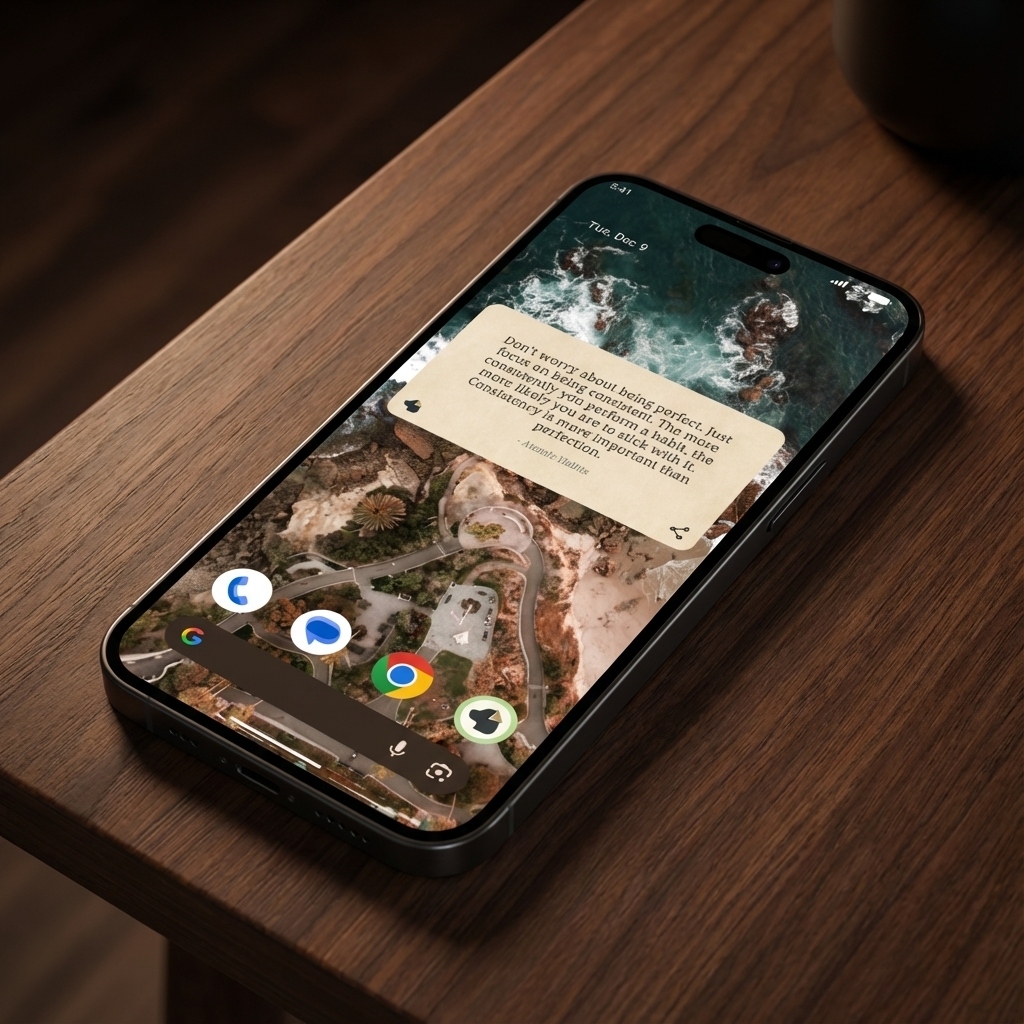
DogEar is a specialized Android widget app designed to solve the Forgetting Curve. It bridges the gap between the book (or the summary) and your daily behavior. It transforms your phone from a distraction device into a personal growth app that reinforces wisdom every time you unlock your screen.

DogEar AI Quote Retrieval: Turning Summaries into Daily Actions

One of the biggest friction points in knowledge retention is manual entry. Nobody wants to type out long quotes on a tiny keyboard.

DogEar solves this with AI Quote Retrieval.

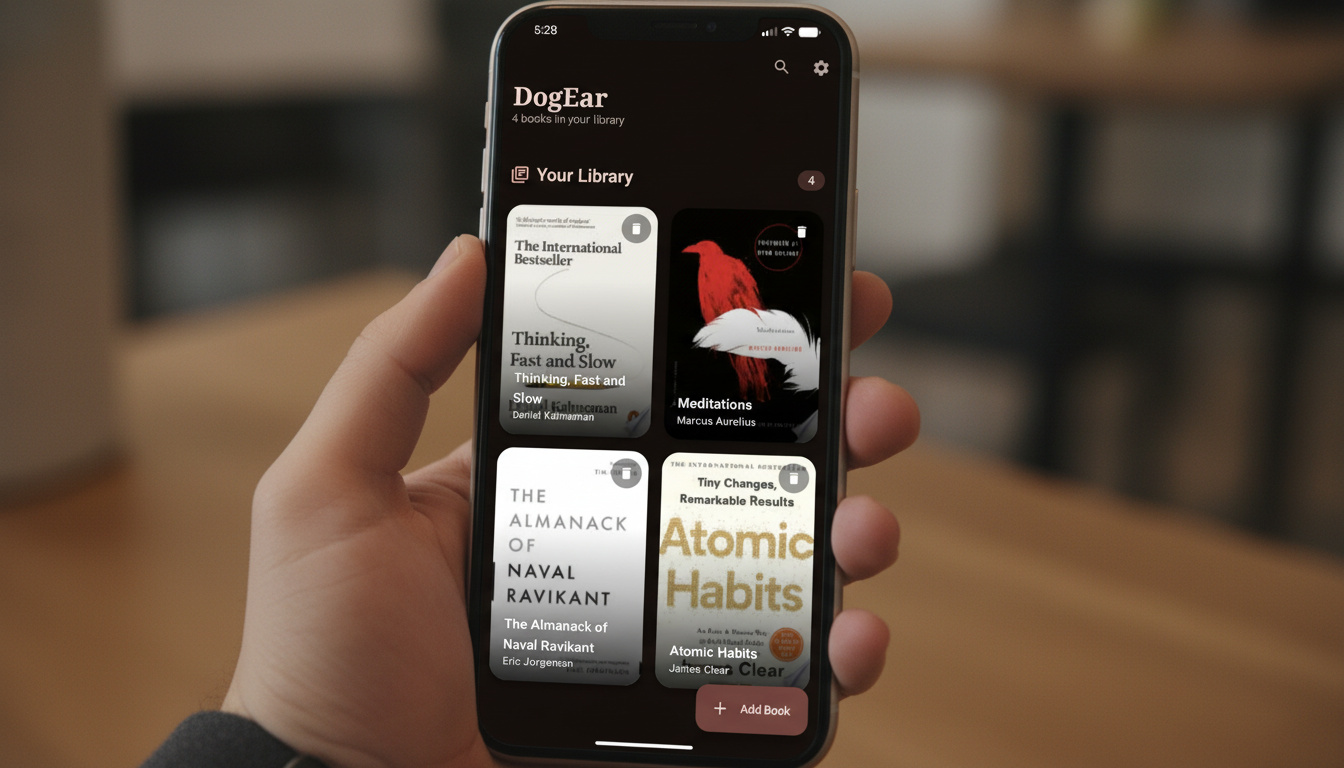
Let’s say you just finished reading a summary of The Psychology of Money. Instead of forgetting the lessons, you simply open DogEar, type the book title, and our AI instantly retrieves the most impactful quotes from that text.

Within seconds, you have a library of wisdom ready to be served to you daily. No typing, no friction—just instant access to the insights that matter.
DogEar vs. Headway: Why Active Recall Widgets Beat Passive Reading

The average person unlocks their phone 150 times a day.

Without DogEar, those are 150 missed opportunities. With DogEar, those are 150 moments of daily motivational quotes and reinforcement.

We designed DogEar to be one of the most aesthetic Android productivity widgets on the market because we know that if it doesn’t look good, you won’t use it. You can customize your widgets to match your vibe:

  • Neomorphic Dark: For a sleek, modern look.
  • Textured Paper: For the classic book lover.
  • System Adaptive: Uses Material You to blend perfectly with your wallpaper.

This is passive active recall. You don’t have to study. You just have to look at your phone. Over time, these subtle nudges rewire your brain, turning fleeting inspiration into permanent character traits.

Headway vs. Blinkist vs. DogEar Pricing: Subscriptions vs. Lifetime Wisdom

When comparing Headway vs. Blinkist vs. DogEar, pricing is a major factor.

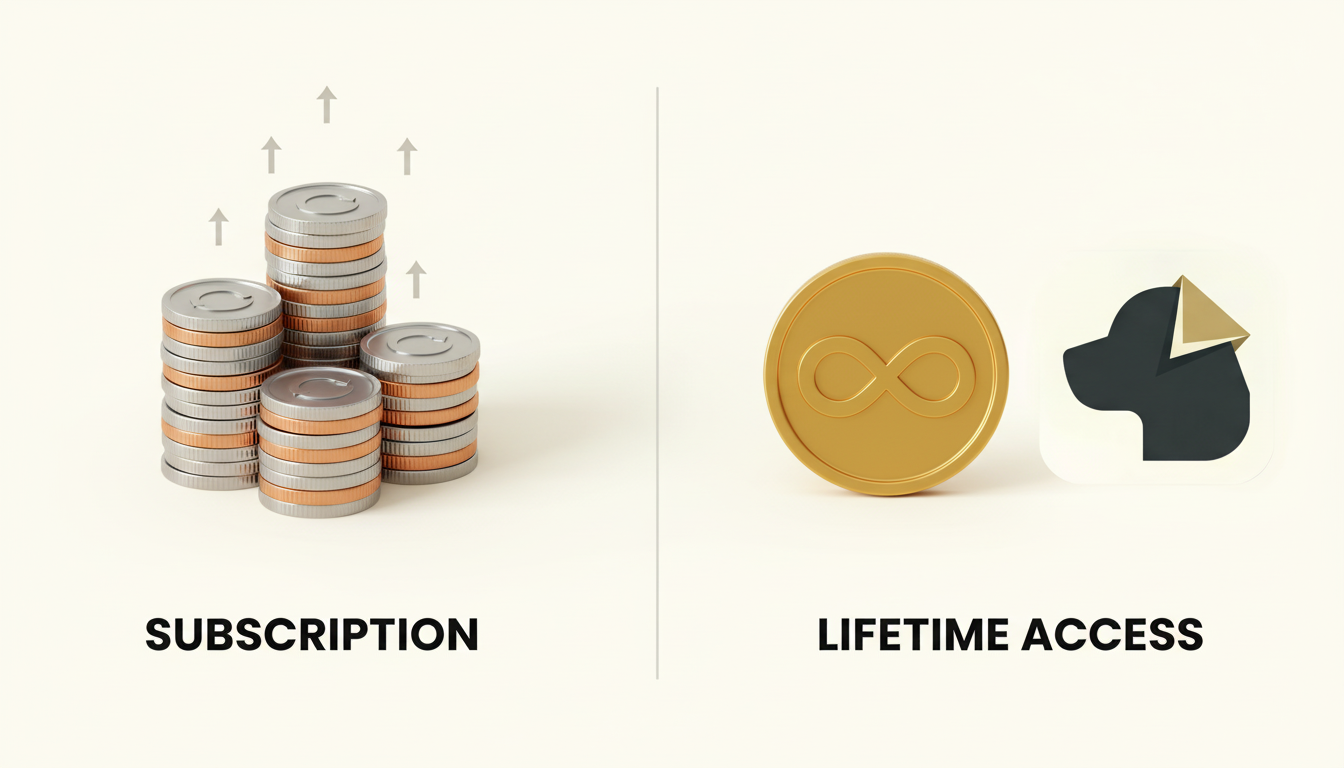
Summary apps operate on a SaaS (Software as a Service) model. You pay a monthly or annual fee, forever. If you stop paying, you lose access to the summaries.

At DogEar, we believe in fair pricing for self-improvement tools. While we offer flexible subscription options, we are famous for our Lifetime Access offer ($49.99).

  • Blinkist/Headway: ~$90/year, recurring forever.
  • DogEar: One-time payment for lifetime wisdom.

For the price of two hardcover books, you get a tool that ensures you remember every book you read for the rest of your life. That is an investment in your own potential.
Conclusion: Stop Highlighting and Start Remembering

Are you reading for speed, or are you reading to change your life?

If you want to scan through titles quickly, keep Blinkist or Headway. But if you are tired of reading incredible books and forgetting the lessons by the next week, you need DogEar.

Don’t let your knowledge fade away. Turn your Android home screen into a vision board of wisdom. Whether it’s Stoic philosophy, financial advice, or mindset transformation tips, keep them right in front of your eyes.

Change your books, change your mindset.

Download DogEar from the Google Play Store today and start building a library that stays with you forever.

The Problem with 15-Minute Book Summaries: Why You Need More Than a Shortcut

We live in the golden age of "hacks." We hack our sleep, hack our diets, and—thanks to the explosion of summary apps like Blinkist and Headway—we try to hack our wisdom. The promise is seductive: Understand the key concepts of "Thinking, Fast and Slow" in the time it takes to drink a coffee.

But there is a flaw in this logic. While you might grasp the intellectual concept, true wisdom requires more than a quick skim.

This is the hidden cost of the summary economy. If you rely solely on shortcuts, you aren't building a better mind; you are merely renting knowledge that you’re destined to forget. Here is the problem with "15-minute" book summaries and how you can actually retain what you read.

The problem with "15-minute" book summaries: person looking confused while reading a smartphone in a library

The Problem with "15-Minute" Book Summaries: The Illusion of Competence

The summary app industry is built on a psychological phenomenon known as the illusion of competence. When you read a polished, 15-minute breakdown of a complex book on Blinkist, the information flows smoothly. It makes sense. You nod along.

Because the text is easy to process, your brain tricks you into thinking you have mastered the material. You feel the dopamine hit of "productivity." But recognizing a concept in a summary is not the same as being able to recall and apply it in a high-stakes situation.

Deep reading vs skimming creates entirely different neural pathways. Deep reading requires struggle, pause, and reflection—the very things summary apps remove to save you time. By stripping away the context and the struggle, they strip away the "stickiness" of the lesson.

Why Passive Consumption Compounds the Problem with "15-Minute" Book Summaries

To truly learn, your brain needs cognitive resonance—a moment where a new idea connects deeply with your existing knowledge.

Passive consumption—scrolling through a Headway summary while commuting or waiting in line—rarely achieves this. It is the intellectual equivalent of fast food: it fills you up momentarily, but provides little nutritional value for long-term growth. 15 minutes is enough time to be introduced to an idea, but it is insufficient for that idea to rewire your neural pathways.

The Retention Gap: Why You Forget Book Lessons Faster Than You Read Them

Have you ever finished a summary (or even a full book) and realized two weeks later that you can’t quote a single actionable takeaway?

This is called the retention gap. It is ruled by the "Forgetting Curve," a concept discovered by Hermann Ebbinghaus. It states that humans forget approximately 50% of new information within an hour and up to 70% within 24 hours unless they engage in active recall.

Popular platforms like Blinkist or Shortform do not usually account for this. They feed you information once, often in a "binge" format. This highlights the problem with "15-minute" book summaries: without a system to revisit those ideas, that expensive subscription is essentially a mechanism for forgetting.

The problem with "15-minute" book summaries illustrated by the Ebbinghaus forgetting curve graph

The Information Overload Trap

In our quest for self-improvement habits, we often fall into the trap of quantity over quality. We assume that reading 50 summaries a year is better than deeply internalizing three great books.

This leads to information overload. Your brain becomes fatigued by the constant influx of new context-less data. Instead of building a library of mental models you can use, you end up with a mental junk drawer—full of fragments you can’t quite place.

Bridging the Gap Between Reading and Action

Knowing a concept is different from living it. You can know about Stoicism from a summary, but that doesn't mean you will remain calm when your car breaks down.

To bridge the gap between reading and knowledge implementation, you need to move the information from your temporary memory to your subconscious. You need to shift from being a "collector" of ideas to a practitioner of them.

From Maps to Compasses: Navigating Wisdom

Think of a book summary as a map. It shows you the terrain, the peaks, and the valleys of an author's argument. Maps are useful, but they are static.

What you actually need to navigate your daily life is a compass. You need a tool that points you in the right direction exactly when you need it. You need the core wisdom of the book to appear in front of you not just once, but repeatedly, until it becomes your default setting.

Introducing DogEar: Turn Fleeting Summaries into Permanent Mental Models

This is exactly why we built DogEar.

We realized that while platforms like Blinkist give you the "what," they fail to give you the "how." DogEar is the bridge between passive consumption and active transformation. If you are looking for a Blinkist alternative that focuses on long-term memory rather than quick consumption, this is it.

DogEar is a specialized Android widget designed to fix the retention gap by integrating spaced repetition directly into your digital environment. We don't want you to just read about "Atomic Habits"—we want you to build them.

AI Quote Retrieval: Instant Wisdom at Your Fingertips

We know that book note-taking is a friction point. You highlight a sentence in a physical book or a Kindle, and then… you never look at it again.

With DogEar’s AI Quote Retrieval, that friction is gone.

  1. You simply type the title of the book (e.g., "The Psychology of Money").
  2. Our AI instantly retrieves the most powerful, high-impact quotes from that text.
  3. You save them to your library.

No manual typing. No internet needed to read them later (thanks to Privacy Focused offline access). Just instant access to the core philosophy of the book.

Spaced Repetition Through Aesthetic Widgets

The secret to a mindset shift isn't intensity; it's consistency.

DogEar places these quotes on your home screen via our Aesthetic Widgets. Whether you prefer the sleek look of Neomorphic Dark, the tactile feel of Textured Paper, or the seamless integration of System Adaptive (Material You) colors, the app ensures the wisdom looks beautiful on your phone.

By seeing these quotes every time you unlock your device, you trigger active recall effortlessly. You turn your home screen from a source of distraction into a source of discipline.

SEARCH: android phone with aesthetic quote widget on home screen

Building Better Self-Improvement Habits

True self-improvement happens in the micro-moments of your day. It happens when you are stressed and glance at your phone to see a quote from Marcus Aurelius reminding you to control your perceptions.

The Power of Micro-Dosing Wisdom

Forget the 15-minute rush. Embrace the power of micro-dosing wisdom.

When you use DogEar, you aren't trying to cram a whole book into your head at once. You are feeding your subconscious small, potent reminders of who you want to be.

  • Anxiety? A widget rotating quotes from Stoic philosophy provides immediate grounding.
  • Procrastination? A line from The War of Art on your screen can push you to do the work.

This is how you build a better mindset: not by reading a summary once, but by living with the wisdom daily.

Frequently Asked Questions About Book Retention

Q: Do book summaries actually help you learn? A: Summaries from apps like Headway or Blinkist are excellent for introductions to topics, but they often lack the nuance required for deep learning. Without active recall, the retention rate for summaries is very low.

Q: How does the "Forgetting Curve" affect my reading? A: The Forgetting Curve suggests you lose up to 70% of new information within 24 hours. To counter this, you must review the material repeatedly over time, a technique known as spaced repetition.

Q: Is deep reading better than using summary apps like Blinkist? A: Generally, yes. Deep reading provides context that aids memory. However, combining reading with a tool like DogEar—which reinforces the best quotes on your home screen—creates the strongest retention loop.

Conclusion: Start Your Journey Toward Active Transformation

The problem with "15-minute" book summaries isn't the content—it's the format. Your brain wasn't designed to retain a firehose of information. It was designed to learn through repetition, aesthetics, and relevance.

Stop letting the lessons you read fade away. Stop highlighting and forgetting. It’s time to turn your home screen into a tool for growth.

Change your books, change your mindset.

Download DogEar on the Google Play Store today.